

AI Farming Tools: The Future of Smart Agriculture
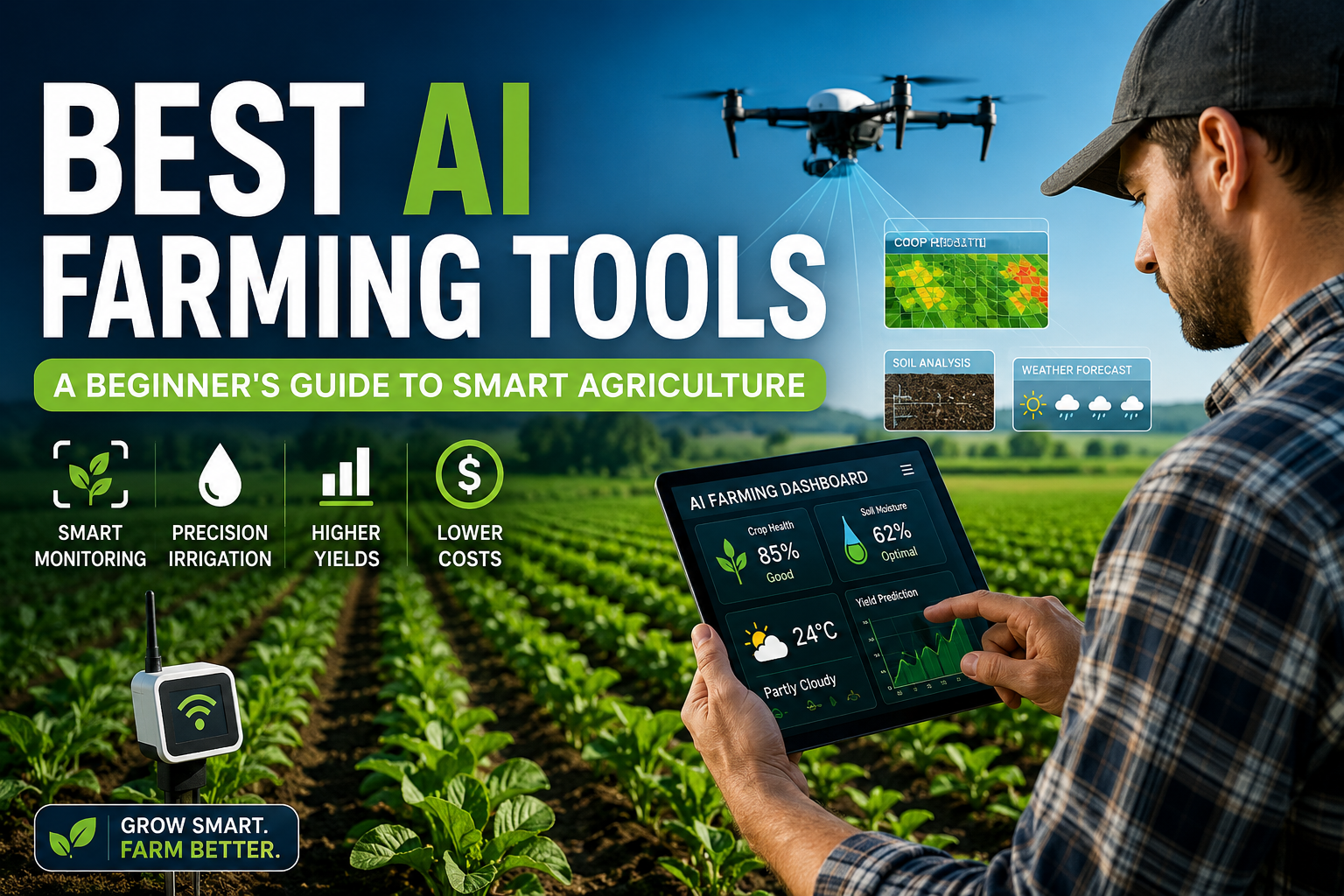
Artificial Intelligence (AI) is changing agriculture faster than ever before. From crop monitoring to weather forecasting and farm management, AI-powered tools are helping farmers produce more food while reducing costs.
One of the most exciting innovations is ChatGPT, which can act as a virtual farming assistant by providing expert advice, generating farm plans, answering agricultural questions, and helping farmers make better decisions.
Whether you’re a beginner, commercial farmer, or agricultural student, AI farming tools can save time and increase productivity.
Why Farmers Are Using AI
Modern farming faces many challenges, including:
Unpredictable weather
Rising fertilizer costs
Pest and disease outbreaks
Labor shortages
Water management
AI tools analyze data in seconds and provide recommendations that help farmers overcome these problems.
Benefits of AI in Agriculture
*Increase crop yields
*Reduce farming costs
*Save water
*Improve livestock management*Better *farm planning
*Save valuable time
How ChatGPT Helps Farmers
ChatGPT is more than just a chatbot—it can serve as a digital farming assistant.
Farmers can use ChatGPT to:
*Create crop planting schedules
*Identify common plant diseases from descriptions
*Generate fertilizer application plans
*Explain modern farming techniques
*Write agricultural business plans
*Prepare grant applications
*Translate farming information into simple language
*Answer farming questions 24/7
*One of the Best AI Farming Applications
Many AI tools are transforming agriculture today.
Popular AI farming solutions include:
*Crop monitoring systems
*AI weather prediction tools
*Drone-powered field inspections
*Smart irrigation systems
*Livestock health monitoring
*Farm management software
*AI-powered soil analysis
PRO’S
These technologies help farmers make informed decisions based on real-time data.
Advantages of AI Farming Tools
Using AI can provide significant long-term benefits like:
*Higher productivity
*Faster decision-making
*Improved crop quality
*Lower production costs
*Better pest detection
*Increased farm profitability
*Sustainable farming practices
CONS
Challenges of AI in Agriculture
Despite its advantages, AI is not without challenges.
Some limitations include:
*Internet access in rural areas
*Initial setup costs
*Need for digital skills
*Data privacy concerns
*Dependence on technology
However, as technology becomes more affordable, these barriers continue to decrease.
Tips for Getting Started
If you’re new to AI farming, start small.
Recommended steps:
*Learn the basics of AI tools.
*Use ChatGPT for farming questions.
*Keep digital records of your farm.
*Experiment with one AI solution at a time.
*Compare results over each growing season.
The Future of AI Farming
AI will continue to transform agriculture in the coming years. Future innovations may include autonomous tractors, robotic harvesting, precision fertilization, and AI systems that detect plant diseases before they become visible.
Conclusion
AI farming tools are helping farmers whether you manage a small family farm or a large commercial operation, integrating AI into your workflow can improve your efficiency and support for more sustainable farming practices.
Frequently Asked Questions (FAQs)
Can ChatGPT diagnose plant diseases?
ChatGPT can provide guidance based on descriptions or images?.
But serious issues should be confirmed by an agricultural expert or laboratory.
Is AI useful for small farms?
Yes. Many AI tools, including ChatGPT, are affordable or free and can benefit farms of all sizes.
Will AI replace farmers?
No. AI is designed to assist farmers by improving decision-making and automating repetitive tasks, not replace human expertise.